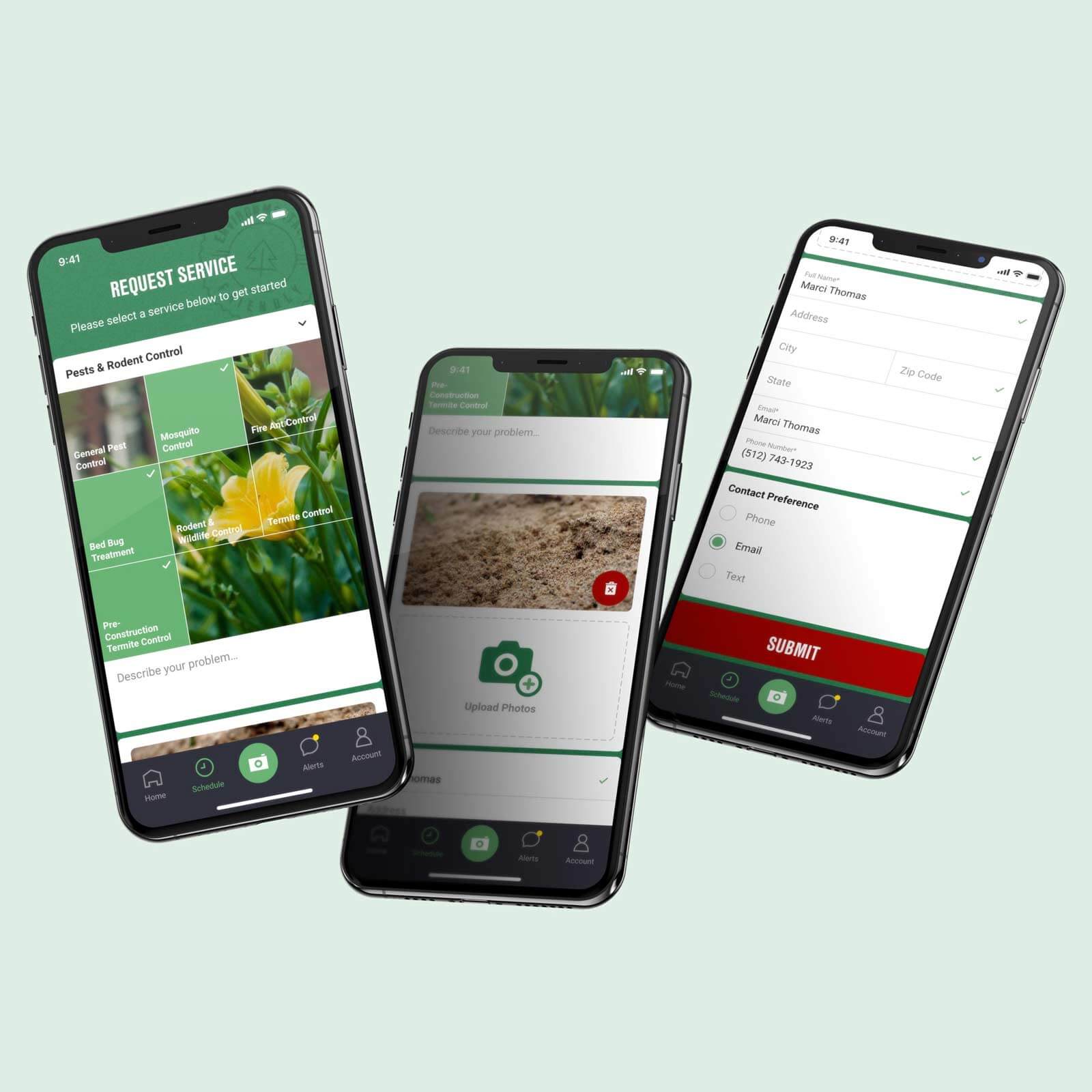
ABC Home & Commercial Services is the single largest pest, lawn, & home service company in Texas.
With the challenges of traditional phone-based service requests, they needed a scalable customer-centric solution to enable customers to accurately identify issues, streamline scheduling to eliminate unnecessary diagnostic visits, and manage increasing service requests without additional resources.
By optimizing the service delivery process, ABC boosted operational efficiency and customer satisfaction across their expanding bilingual customer base.
CASELET
MY ROLE
Lead Product Designer
REQUEST SERVICE
Reduces customer service calls while the company continues to scale by providing a self-service request app for customers to schedule specialists.
TARGET AUDIENCE
Recurring customers who prefer self-service request apps (ex. Pizza Hut)
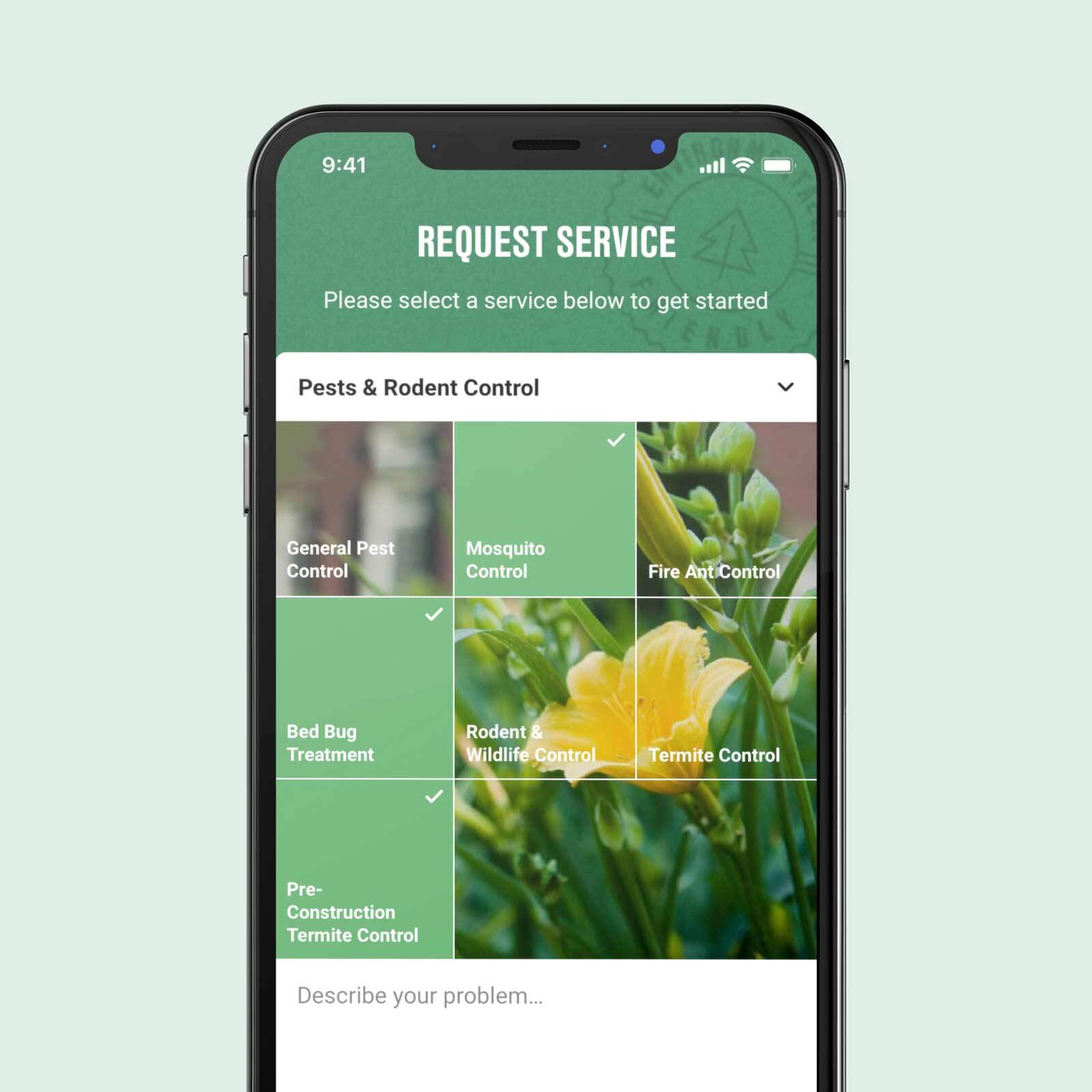
BUSINESS CHALLENGES
Through discussions with customer service representatives, specialists, and recurring customers, several clear patterns emerged:
Specialists have trouble understanding problems that were described over the phone, which results in more diagnostic visits.
If customers can use a self-service feature to request a specialist, then resource allocation will be more efficient, resulting in reduced operational waste.
Give specialists the information that they need in order to prevent a diagnostic visit while reducing the burden on customer support resources.
THE REAL PROBLEM
WIREFRAME ITERATIONS
By sharing wireframes with customers who had recently had services completed by ABC and asking them how they would fill out the page for the service that they just received, I was able to check back with specialists on what additional information they felt would be useful.
Both customers and specialists made it obvious how useful photos would have been during the initial process.
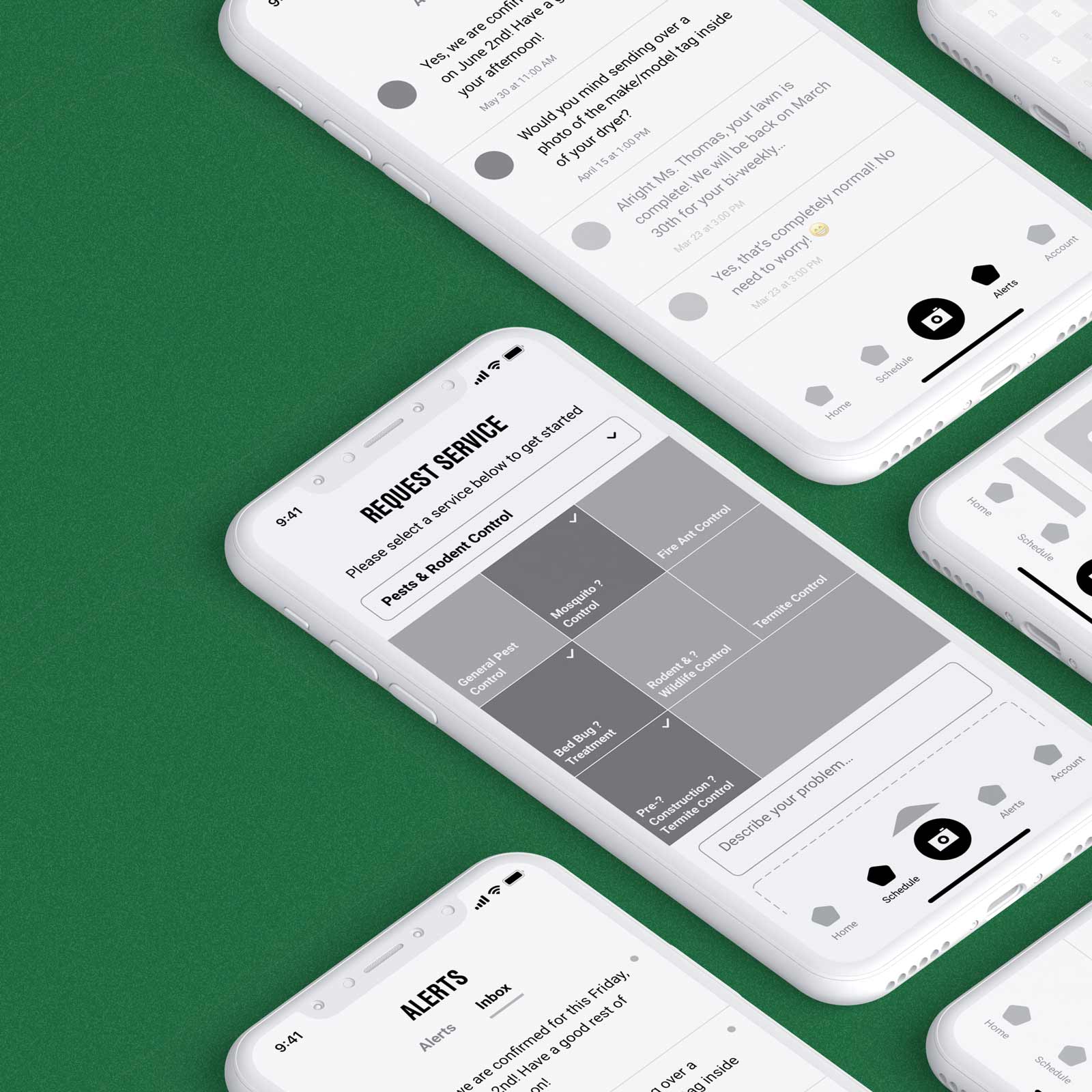
Self-service wireframes
USABILITY
Wireframes were converted into high-fidelity prototypes tested with new and recurring customers.
By utilizing sites like trymyui.com and usertesting.com I was also able to test usability on people who were not familiar with ABC's services.
UPLOAD PHOTOS
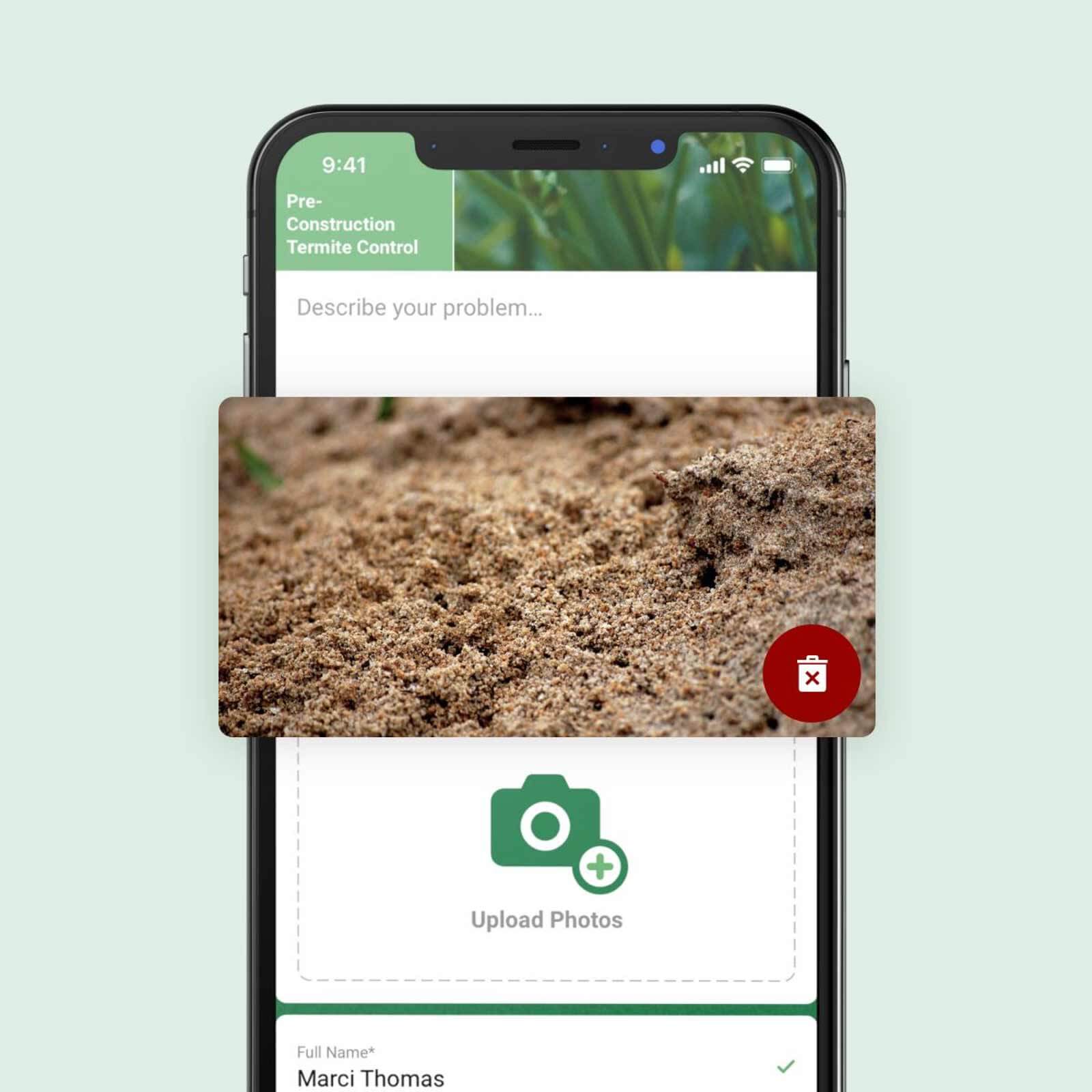
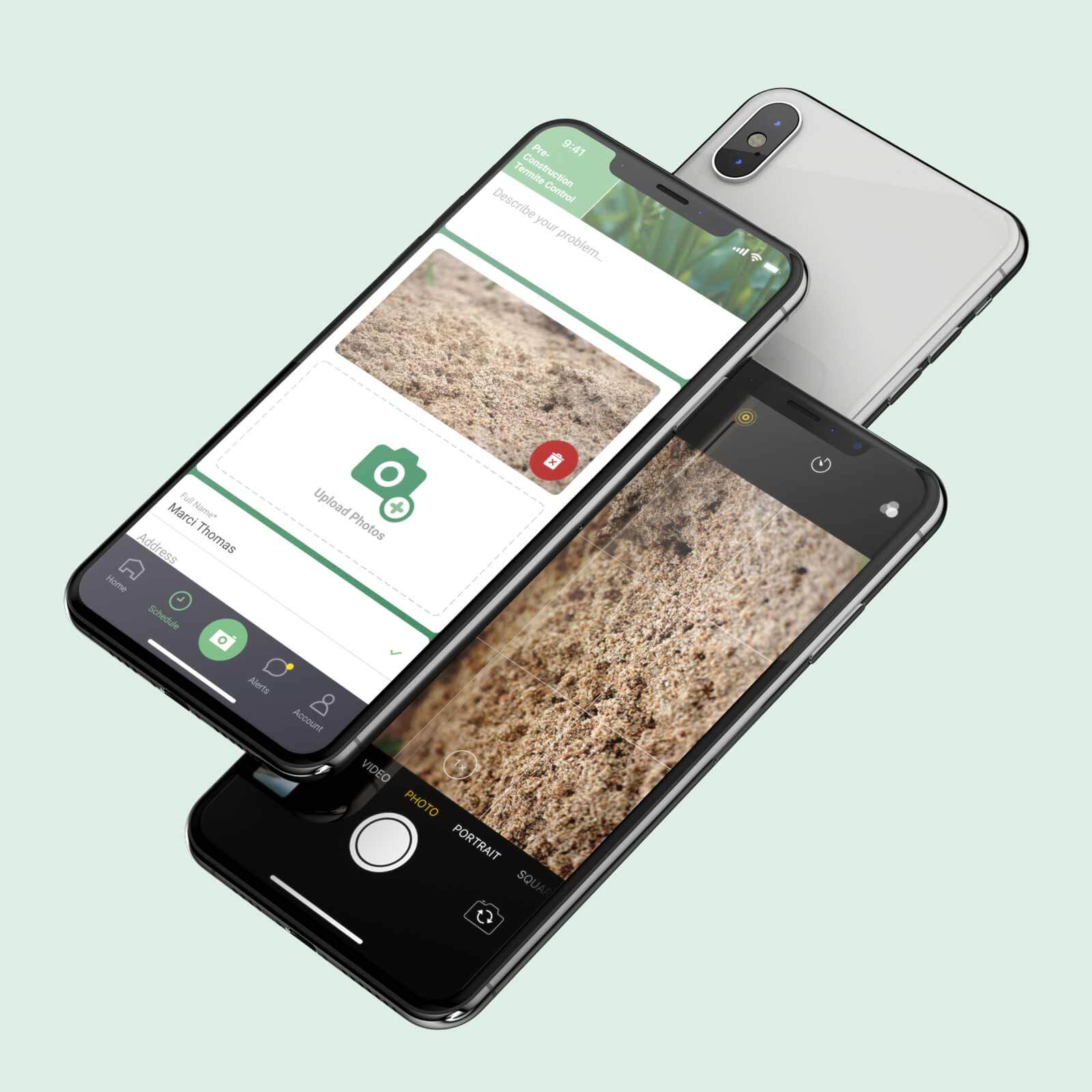
To address the core challenge of incomplete information during phone-based service requests, the app included a photo upload feature. This allowed customers to attach images directly to their requests, providing specialists with visual context to better understand the issue before arriving on-site.
By allowing specialists to review photos ahead of time, the solution reduced the likelihood of diagnostic visits, allowed for more accurate upfront quotes, and ensured they arrived equipped with the right tools and materials.
IN-APP MESSAGING
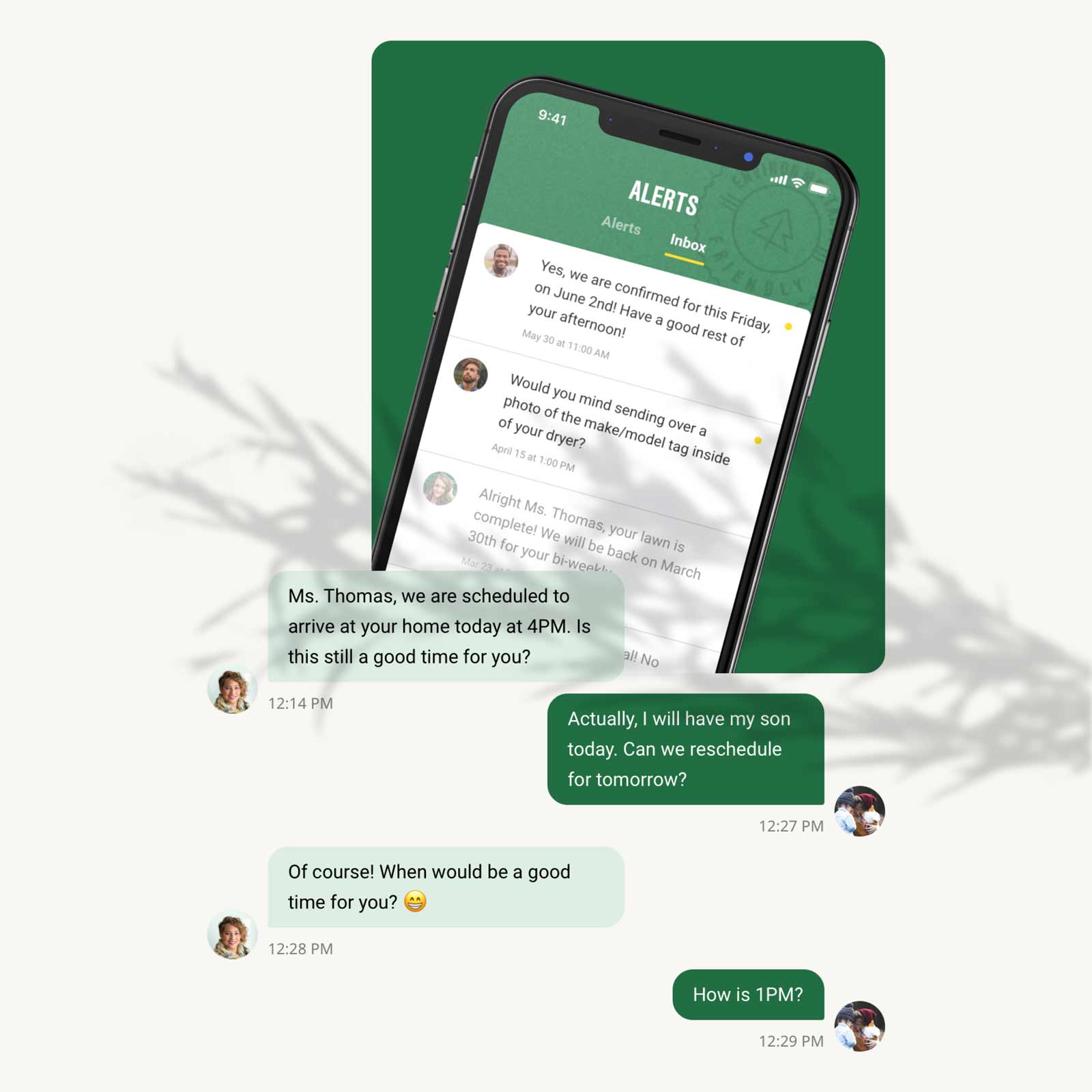
Specialists and customer service could contact customers directly in-app to request more info or photos.
This complemented the service request by allowing ABC to remotely collect the information needed to provide a quote and assign the correct specialist.
LOCALIZATION
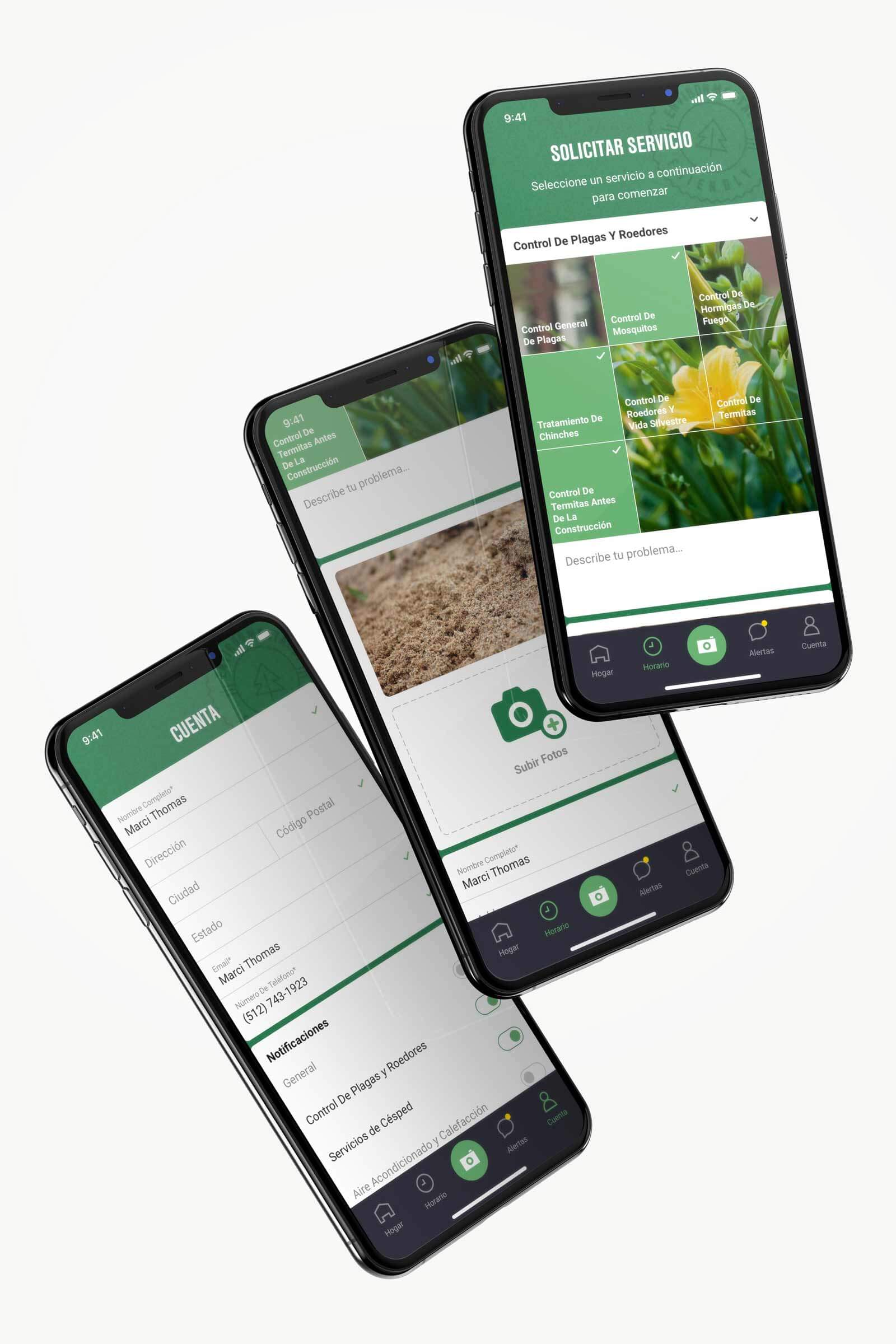
With over 10 million Spanish speakers in Texas, translating the entire app into Spanish was non-negotiable—not only to guarantee accessibility but also to unlock the potential of a 30% increase in conversion rates afforded to those who offer Spanish-friendly products in the Lone Star State.
With full support for both English and Spanish, we allowed customers to seamlessly navigate the app, complete service requests, and communicate with specialists in their preferred language.
WHY THIS WORKED
By focusing on empowering both customers and specialists through a self-service solution, ABC addressed key inefficiencies in its traditional service model. The implementation of a streamlined, photo-enabled request process allowed specialists to gather more complete and actionable information upfront, significantly reducing the need for diagnostic visits and more than doubling the amount of service requests.
THIS RESULTED IN:
RETROSPECTIVE
The iterative design process allowed for valuable insights by engaging directly with key stakeholders, including customers and specialists. However, future iterations could benefit from incorporating real-world testing and a deeper analysis of existing workflows.